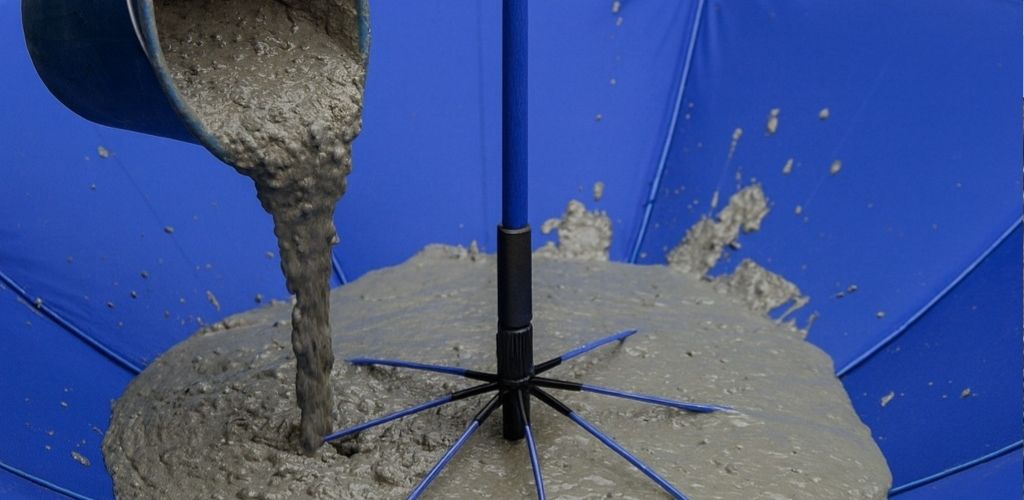
When we think about a parasol for the garden, beach, or patio, we sometimes overlook something fundamental: the base. A lightweight parasol with a flimsy base can tip over in a breeze, ruining a sunny afternoon or even causing accidents.
This educational article offers you a simple and very effective idea: using cement and household materials to create a heavy and stable base.
Here I explain step by step how to do it — and why it’s so worthwhile.
Materials needed
To make this homemade base — reliable, economical and reusable — you need:
- A large, sturdy plastic container (it could be a bucket, a clean paint can, etc.).
- Cement (or concrete mix) + water.
- Gravel or small stones / sand — optional, but recommended if you want to add more weight and stability.
- If your umbrella has a metal pole or a pole of variable diameter: some internal tube/pipe that fits into the base to support the umbrella and secure its position.
How to do it — step by step
- Prepare the container — Make sure it is clean, dry, and free of cracks. If you are using a paint bucket, for example, make sure it is already thoroughly washed.
- Add gravel or stones (optional) — If you want more weight, put a layer of stones or gravel at the bottom. This gives the counterweight additional stability.
- Prepare the cement/concrete mix — Mix cement with water according to the package instructions; the mixture should have a pasty, but manageable consistency.
- Insert the umbrella pole (or a guide tube) — If you have a tube or pipe that matches the diameter of the umbrella pole, place it in the center of the container before pouring the cement. This will serve as a fixed guide.
- Pour the cement mixture into the container — Carefully pour the concrete until it’s almost to the rim. If you used stones at the bottom, the mixture should cover them.
- Let it set / dry — It is essential to let the cement dry for a sufficient time (according to instructions, usually 24–48 h) before inserting the umbrella and using it.
Why it’s worth it — advantages of this homemade base
- Real stability : By using cement and weight, the umbrella will remain firm, even in windy conditions. Many homemade methods using sand or water do not achieve the necessary stability.
- Durability : A cement base lasts much longer than a plastic one using only water. It doesn’t break or lose effectiveness over time.
- Economical : The materials are usually inexpensive or reused (buckets, old drums, garden stones). There’s no need to buy an expensive new base.
- Versatility : It can be used on patios, gardens, balconies, beaches, and terraces. If it’s detachable—with a guide tube—you can reuse the base, even with different umbrellas.
- Easy to do : It doesn’t require complex tools or advanced techniques. Any DIY enthusiast can do it at home.
Some things to keep in mind
- Make sure the plastic container is sturdy and won’t warp under the weight. If it warps, the base could fail.
- The cement must fully set before using the umbrella. If you put it up too soon, the base may be damaged or the umbrella may become unstable.
- If the umbrella pole is very thin or irregular, it may move unless you use a guide tube or some method to fix it securely.
Conclusion
Transforming a simple container into a cement base for an umbrella is a simple, accessible, and surprisingly effective trick. If you use this method, you’ll notice that the umbrella stays firmly in place despite wind or movement—something many people overlook until it’s too late.
I encourage you to try it: with few materials, a little drying time and the correct instructions, you can have a solid, durable and economical base that makes a real difference.