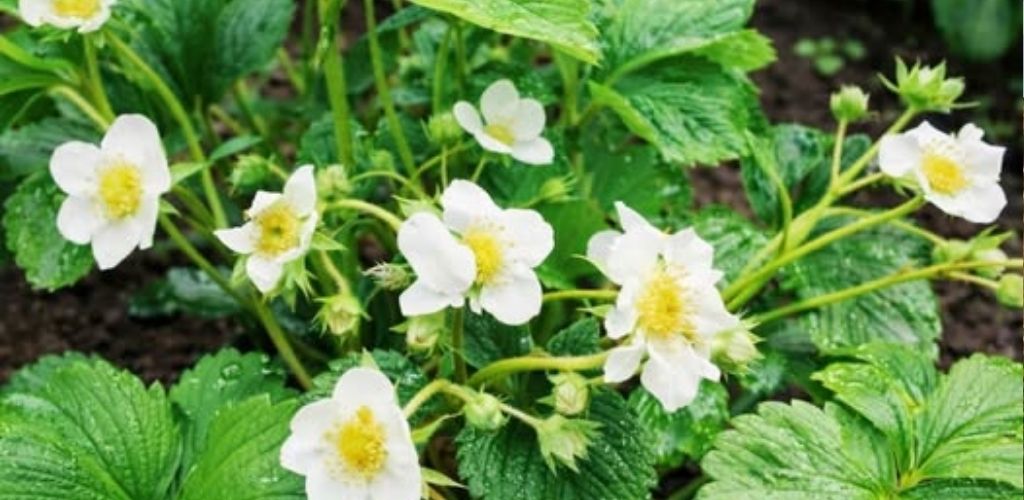
The ancient milk method has long been used as a natural fertilizer for many garden crops, and strawberries are no exception. Dutch farmers are especially fond of this technique.
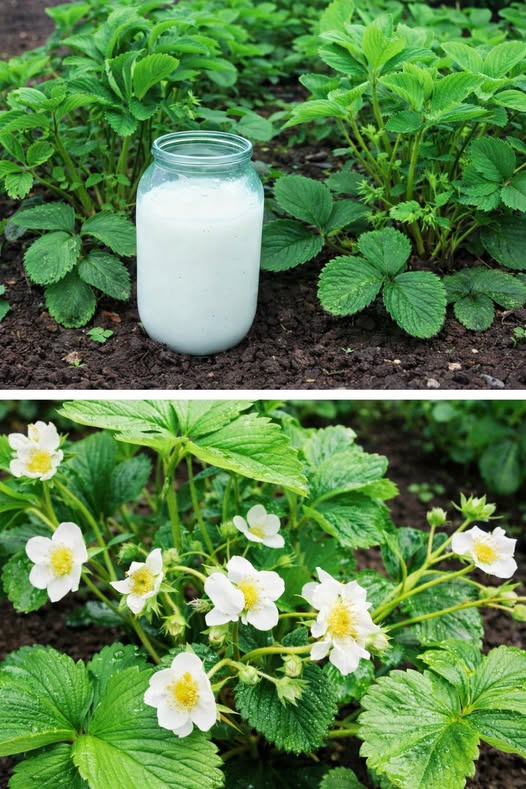
Just 7 days after this feeding, the strawberry bushes literally change before your eyes under the influence of this “white natural fertilizer.”
Even the weakest plants begin to actively gain strength. The foliage becomes thick, dense, and a rich dark green, and the entire bed looks like a solid white carpet of flowers.
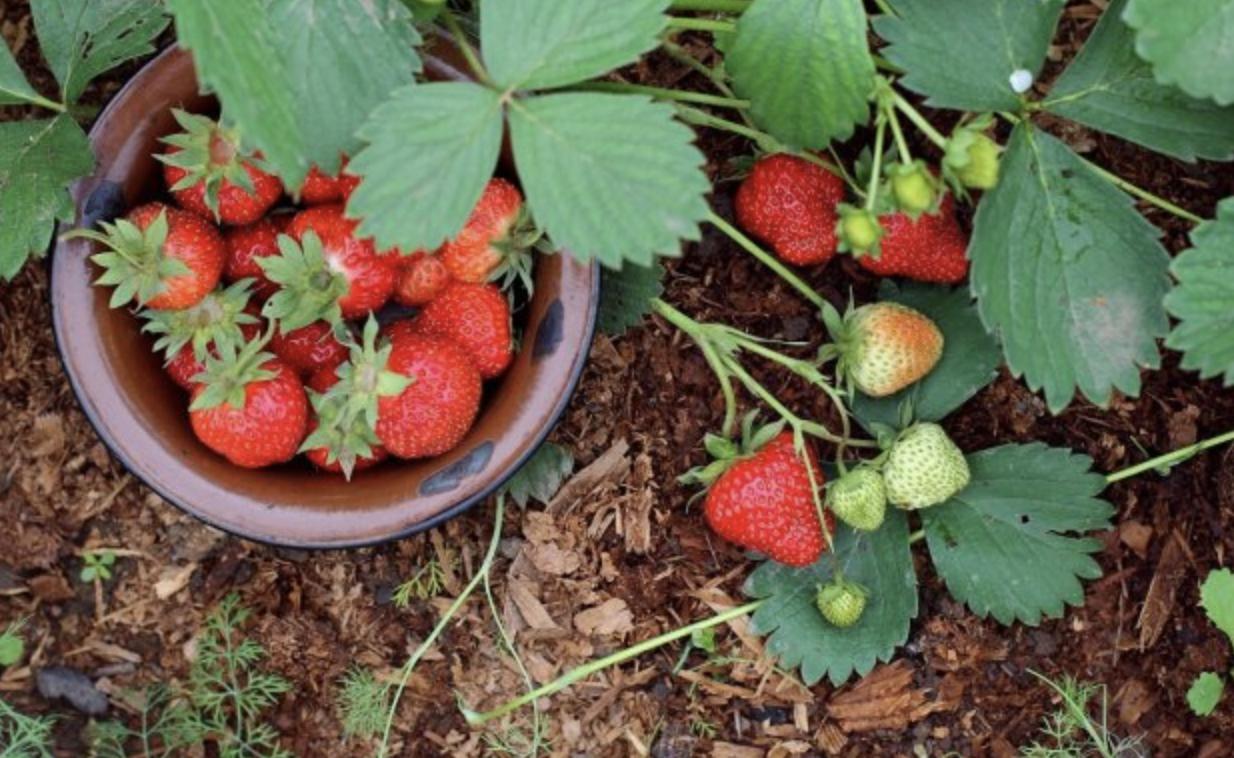
Milk feeding also affects the size of the berries – they become 1.5-2 times larger than usual.
Some agronomists even deliberately buy expired milk from stores and use it to care for their crops.
But moderation is crucial here. Therefore, I’m sharing the exact proportions for milk supplementation below.
Proportions for strawberries:
Milk or skim milk: ratio 1 to 50. Add 1 glass of milk or skim milk to a standard 10-liter bucket of water.
If you’re using store-bought milk, it’s best to choose the lowest-fat variety. Spray the leaves with the prepared solution until they’re completely wet. This treatment is best done in the evening or on cloudy days.
The microelements contained in milk act both as nutrition and as protection against pathogenic fungi, as a thin, oily film forms on the surface of the leaves.
Whey and curdled milk: in this case, the solution can be made more concentrated – 1 liter of curdled milk or whey per 10 liters of water.
This mixture can be used to water the strawberry bed or to spray the plants.
Milk spraying should not be done during flowering, but before and after flowering is the best time for such feeding.