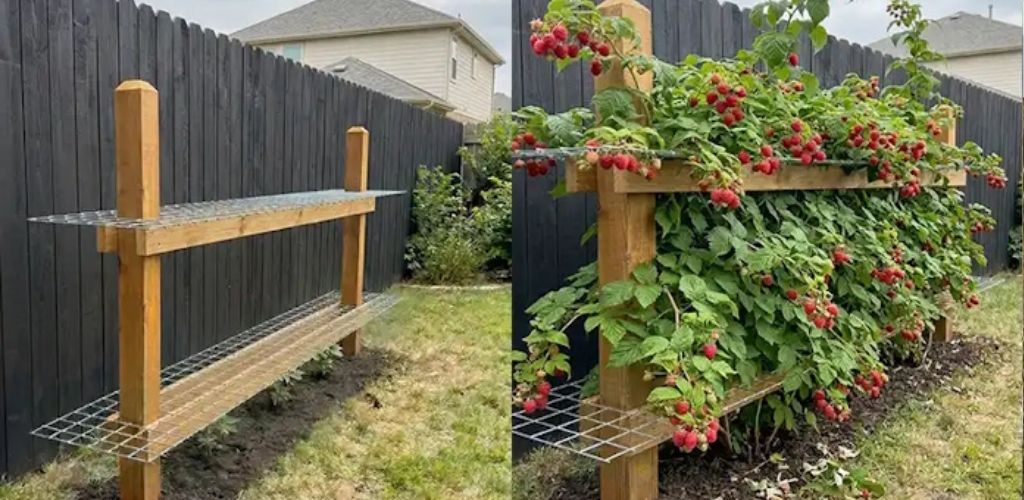
Having your own raspberries near your home is a real pleasure. There is nothing better than picking ripe, fragrant berries right off the bush and immediately tasting them while they are still warm from the sun. But there is one caveat: if you let raspberries take over, they very quickly turn into chaotic thickets that take over everything around them and no longer yield the harvest you were hoping for.
The good news is that raspberries are not as difficult to care for as they may seem. If you properly limit their growth from the very beginning, give them support, sun, and timely pruning, they can delight you with generous harvests for years. It is a few simple rules that often make all the difference.
Why do raspberries need control?
Raspberry is a very vigorous crop. It actively grows underground roots, from which new shoots appear, sometimes quite far from the main bush.
If left unchecked, it can:
- to quickly occupy the lawn
- to climb into the beds
- thicken so much that the berries become smaller
- to turn into impassable thickets
Therefore, one of the main secrets of a good harvest is not just to plant raspberries, but to immediately keep them within limits.

1. Limit the roots until the raspberries have grown everywhere
This is one of the most important steps if you want to have a productive yet tidy raspberry patch.
What can be done?
Use physical restraints
A very good option is to plant raspberries:
- in raised beds
- or in an area with an underground root barrier
It is advisable to deepen such a barrier by approximately 45–60 cm so that the roots do not spread further.
Leave an open lane around
A strip of lawn or just open space around the raspberry bush is also a convenient solution. If a new shoot appears outside the border, you will immediately notice it.
Remove excess sprouts immediately
As soon as you see a young shoot in the wrong place, pull it out by the root as soon as possible.
👉 The sooner you do this, the easier it will be for the raspberries to stay within limits.
2. Give the bushes support – a trellis is not a luxury here, but a necessity
Raspberry shoots grow tall, and when they bear many berries, they begin to droop. Without support, the branches fall, the berries get dirty, spoil, and are more susceptible to pests and diseases.
Why is support so important?
Berries stay clean
The bunches do not touch the ground, so there is less risk of rotting.
Better ventilation
When the shoots are raised, air can pass through them more freely. This helps the leaves dry faster after rain and reduces the risk of fungal problems.
Easier to care for and harvest
With a trellis, it is easier to water, prune, and pick berries.
What can be the simplest wallpaper?
It is enough to dig strong posts at the edges of the row and stretch wire or secure a net between them. As the shoots grow, they will lean on it and hold on much better.
3. Give raspberries the right soil and plenty of sun
Where raspberries grow is just as important as how you care for them. If the location is not good, the harvest will be weaker.
What raspberries like
Full sun
For a good harvest, raspberries need at least 6–8 hours of direct sunlight per day . The more light, the larger the berries and the sweeter they usually are.
Good drainage
Raspberries don’t like to stand in wet soil. If the soil is too wet or heavy, the roots can start to suffer.
A generous layer of mulch
It is useful to pour around the bushes:
- straw
- leaf
- wood chips
- other organic mulch
This helps retain moisture, suppresses weeds, and protects roots in the heat.
4. Pruning is the main secret to a big harvest
Pruning raspberries seems complicated to many, but in the case of raspberries, it’s quite logical. If you don’t prune them regularly, the bush will gradually turn into a chaos of dry, old, and weak shoots.
How does a raspberry shoot live?
Usually a shoot lives for two years :
- In the first year it grows and gains strength.
- bears fruit in the second year
- after that it dies
What to do
Once the shoot has borne fruit and become completely brown and woody, it should be cut off to the ground .
Thinning
In late winter or early spring, look at the remaining green shoots. Keep the strongest ones and remove any that are too thin, weak, or unnecessary.
The guideline is simple: you should leave about 4–5 strong shoots for every foot of space . If it’s easier, don’t be afraid to thin out—thick thickets only do harm.
Shortening the tops
If the shoots are too long, over about 1.8 m , the tops can be trimmed slightly. This helps the plant direct its energy not only into upward growth, but also into the formation of berries.
5. Watering and fertilizing without unnecessary complications
Even well-rooted raspberry bushes need support during the active growing season.
Watering
Raspberries typically need about 1–2 inches (2.5–5 cm) of water per week .
It’s best not to lightly spray every day, but to water more deeply once or twice a week .
You need to water at the root.
Try to moisten the soil at the base of the bush, not the leaves. This reduces the risk of disease.
Refueling
In early spring, when new green growth appears, a basic balanced fertilizer can be applied.
⚠️ Do not fertilize raspberries late in the summer, as this stimulates new tender shoots that may freeze in the winter.
6. What to remember if you want a really good result
In short, a strong and productive raspberry bush relies on several things:
- root growth control
- strong trellis
- lots of sun
- moist but not waterlogged soil
- regular and bold pruning
It is this basic system that produces the result everyone wants: big, clean, sweet berries instead of overgrown chaos.
Conclusion
Raspberries can be one of the most prolific crops in the garden if you don’t let them grow unchecked. When you keep them from spreading, tie up the shoots, give them sun, and don’t forget to prune, the bushes become healthier, easier to care for, and the harvest is much larger.
Sometimes, all it takes is a little seasonal work to turn a small plot of land into a veritable raspberry factory. And when the berries start to be picked, it becomes clear: it’s definitely worth it.
Write in the comments whether you grow raspberries at home and what is the most difficult for you – restraining their growth, pruning them correctly, or getting really big and sweet berries 👇😊