
Milk is a valuable fertilizer for tomatoes and cucumbers! It’s rich in essential nutrients and contains lactose, a milk sugar that’s resistant to pests.

This creates a natural barrier for plants. Spraying plants with milk also creates a protective film that protects them from many diseases, including late blight and downy mildew.
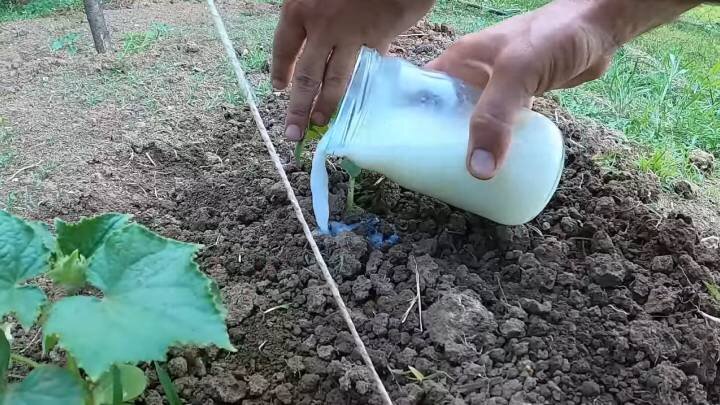
Fertilizing through the root system
Milk contains many important elements such as phosphorus, magnesium, potassium, calcium, copper and sulfur – all of which are extremely beneficial for plants.
For root feeding, mix milk with water in a ratio of 1:2 and water at the roots approximately 0.5-1 liter per plant every two weeks throughout the season.
Foliar feeding and protection
Lactose in milk is not digested by pests, so regular spraying of the leaves creates a thin protective film.
To do this, dilute milk with water in a ratio of 1:10 and spray the plants every two weeks, preferably in cloudy weather or after sunset to avoid sunburn.

It is better to use raw milk that has not been heat treated, as it retains all its beneficial properties.

By regularly fertilizing plants with milk, you will notice a significant improvement in their condition and yield.