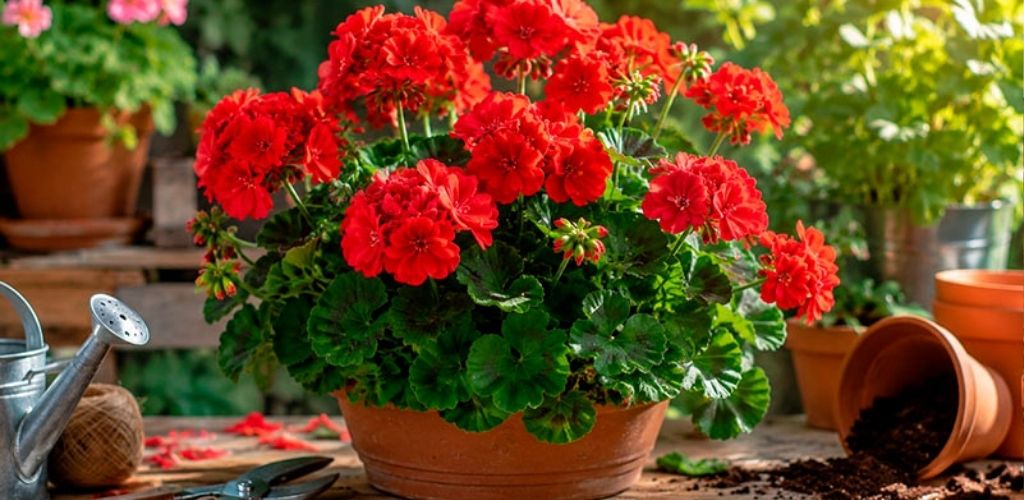
Pelargonium is deservedly considered one of the most popular indoor and balcony plants. It attracts with its bright flowering, unpretentiousness and ability to quickly propagate by cuttings. However, many flower growers face a problem: young plants take a long time to adapt after rooting, slowly increase green mass and are in no hurry to form buds.
Over the years of growing pelargoniums, I have learned that success depends not only on watering and lighting. There is a simple home method that helps young plants get stronger faster and start active growth.
How to properly root pelargonium cuttings
For propagation, choose healthy apical shoots 8–10 centimeters long. The lower leaves should be removed, and the cut site should be left to dry for 1–2 hours. After that, the cuttings are planted in a light and breathable substrate with good drainage.
Watering should be moderate. Excess moisture often causes rotting of young roots, so the soil should remain slightly moist, but not wet.
Home feeding for active growth
Many gardeners use a simple solution:
- 1 teaspoon of sugar;
- 1 liter of settled water at room temperature.
Sugar is completely dissolved in water and used for root irrigation. It is recommended to carry out this procedure no more than once every two weeks.
It is worth remembering that sugar solution does not replace full-fledged fertilizers. It can only be used as an additional means of care, while for active growth and flowering the plant needs nutrients – nitrogen, phosphorus and potassium.
The secret of a lush bush
To make pelargoniums dense and compact, pinch the top after several pairs of leaves appear. This simple procedure stimulates the formation of side shoots and helps to form a beautiful bush.
An equally important factor is lighting. Pelargonium is a light-loving plant, so it grows best on sunny windowsills or well-lit balconies. It is a sufficient amount of light that is one of the main conditions for abundant flowering.
How to feed pelargonium for a large number of buds
After rooting and active growth, it is advisable to feed the plant with complex fertilizers for flowering crops. Compounds with a high content of potassium and phosphorus are especially useful, as they contribute to the formation of buds and prolonged flowering.
With proper care, regular pinching, and sufficient lighting, pelargonium quickly turns into a lush flowering bush that will decorate your home or balcony throughout the season.