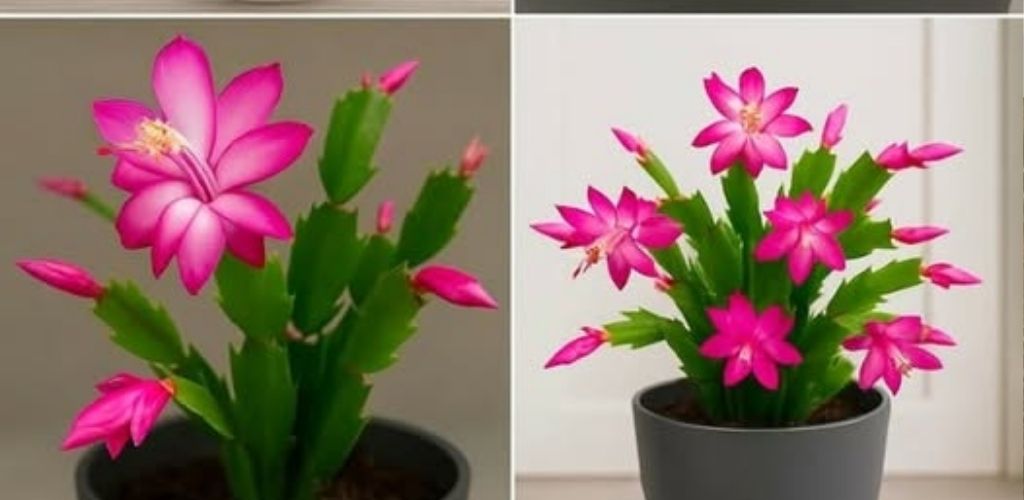
Christmas Cactus Care Guide: Expert Secrets for Stunning Winter Blooms
Every December, a spectacular natural miracle transforms my living room into a festive cascade of vibrant petals. My name is Marina, and for many years, my home has been blessed with the presence of a magnificent holiday plant: the Schlumbergera, universally known as the Christmas cactus. While many indoor plant owners struggle to get their cacti to reflower, my dependable plant covers itself in such an abundance of buds each year that even I am left in awe of its seasonal beauty. Achieving this lush, head-turning winter bloom is not a matter of random luck, but rather the reward for understanding the natural life cycle of the plant. Below, I am thrilled to share my time-tested, step-by-step winter bloom secrets that have never let me down.
The Perfect Environment: Bright Indirect Light and Autumn Cooling
The first foundational secret to holiday plant success lies in recreating the natural, shaded environment of the Brazilian rainforests where these epiphytic cacti originate. Unlike desert cacti, a Schlumbergera cannot tolerate harsh, direct sunlight, which quickly scorches its tender green segments and turns them a sickly yellow. The absolute best location in your home is an east-facing windowsill or a bright room where the light remains beautifully soft and scattered. Once the proper lighting is secured, the next critical trigger for bud development is an autumn temperature drop. To force a Christmas cactus to bloom, it requires a distinct period of cool dormancy. Starting in October, I move my container to an insulated balcony or a chilly spare room where temperatures consistently hover between 14°C and 16°C (57°F to 61°F), as this thermal contrast safely kickstarts the biochemical mechanism for flower production.
Mastering Seasonal Watering and the Golden Rule of Immobility
Water management is the area where most indoor gardeners accidentally harm their Schlumbergera. The golden rule here is to adapt your watering routine to the plant’s shifting seasonal phases. During the autumn dormancy period, moisture must be kept to an absolute minimum, watering only when the top few inches of soil feel completely dry to the touch. However, the moment you spot tiny, pinhead-sized flower buds forming at the tips of the green segments, the strategy must flip: keep the potting mix consistently and lightly moist, but never soggy or waterlogged. Saturation is the number one culprit behind sudden root rot and premature bud drop.
Seasonal Care Checklist for Christmas Cactus Blooms:
| Growth Phase / Season | Temperature Requirement | Watering Frequency & Routine | Fertilization & Nutrient Needs |
| • Spring & Summer | Warm Room Temp (20°C–25°C) | Moderate (Water when topsoil dries) | Balanced liquid fertilizer every 2 weeks |
| • Autumn Dormancy | Cool Contrast (14°C–16°C) | Minimal (Keep soil mostly dry) | Stop all feeding completely |
| • Winter Blooming | Standard Indoor Temp | Consistent (Keep soil lightly moist) | No fertilizer needed during flowering |
| • Post-Bloom Rest | Cool & Cozy | Very Light (Allow soil to dry out) | Pause all nutrients for 1 month |
Potting Mix Secrets and Strategic Fertilizer Application
To sustain a massive canopy of blossoms year after year, your Christmas cactus needs a highly aerated, lightweight, and loose substrate. I repot my mature holiday plants once every two to three years right after the spring awakening, using a custom, well-draining mixture of peat, perlite, and fine pine bark chips. Always install a generous layer of expanded clay pebbles or gravel at the bottom of the container to facilitate instant drainage. When selecting a pot, choose one that is cozy but not excessively large; Schlumbergera plants actually bloom far more reliably when their root systems are slightly snug and pot-bound, as oversized containers trap stagnant water and stall flower production.
Nutrient timing is equally vital to ensuring your plant has the stamina to push out a heavy yield of flowers. From early spring until the middle of summer, I feed my cactus with a dilute, balanced liquid fertilizer specifically formulated for flowering house plants to support new segment growth. However, as soon as late August arrives, you must cut off all plant food entirely. Forcing the plant into a temporary nutrient pause during the fall is essential, as it signals to the stems that it is time to stop growing new leaves and focus all internal energy on crafting healthy flower buds.
Post-Bloom Maintenance: The Gentle Twist-Off Pruning Method
The final step in my annual care routine occurs immediately after the last festive blossoms have faded and dropped off. Instead of reaching for a pair of metal scissors, which can introduce pathogens into the open plant tissue, I perform a gentle manual trim. Using my thumb and index finger, I carefully twist off one or two trailing green segments from the ends of the longest stems. This simple, stress-free pinching technique stimulates the nodes to branch out into two separate paths, creating a much bushier, structurally sound plant. Because flowers only form on the tips of new growth, this effortless post-bloom haircut guarantees that your Schlumbergera will return next winter with twice as many bright blossoms. By syncing your care routine with the natural rhythms of this rewarding winter treasure, you can look forward to a stunning, joyful holiday display for decades to come!