How to Secure Your Washing Machine Drain Hose: Professional Plumbing Secrets to Prevent Water Damage
In the modern household, the washing machine is an indispensable appliance that handles heavy-standing water on a daily basis. For the majority of apartment dwellers and homeowners, this heavy-duty appliance sits comfortably in the bathroom or dedicated laundry area. However, because it processes massive amounts of water under high pressure, a loose connection can lead to a domestic disaster. It is incredibly common for a standard washing machine drain hose to suddenly snap, slip, or fly out of its pipe, sending gallons of dirty wastewater flooding straight through the floorboards and down into your neighbors’ ceiling. While living in a private house means you won’t ruin a neighbor’s property, repairing structural water damage in your own home is still an incredibly stressful and expensive ordeal.
Evaluating the Three Main Ways to Connect a Washer Drain System
To ensure total peace of mind during a heavy spin cycle, you must understand the proper plumbing installation standards. Generally, there are three primary methods used to hook up an appliance discharge system: routing through a dedicated sink siphon, draining directly over a fixture edge, or connecting straight into the main sewer pipe. Among these options, utilizing a specialized under-sink siphon equipped with an integrated check valve is universally considered the most reliable solution. The internal mechanism of a quality siphon allows graywater to escape freely while acting as a physical barrier against hazardous sewer gases and dangerous backflow.
However, if your laundry setup dictates that the machine is positioned more than 1.5 meters away from the nearest sink, routing through a siphon becomes impractical, forcing you to connect directly into the sewer framework. Many people resort to a temporary fix by hooking the curved end of the plastic discharge line over the slippery edge of a bathtub, laundry tub, or washbasin. While this hook method works in a pinch, it is highly unstable. The violent vibrations of the machine, combined with the sudden hydraulic force of pumping water, can easily dislodge the plastic hook, turning a temporary convenience into an immediate flooding hazard.
Washing Machine Drain Methods Comparison:
| Connection Method Used | Reliability & Safety Level | Primary Structural Advantage | Major Hidden Weakness |
| • Sink Siphon with Check Valve | Excellent (Highly Recommended) | Total protection against backflow and toxic gas | Requires close proximity to a sink basin |
| • Direct Sewer Pipe Connection | Good (If secured with an adapter) | Perfect for long-distance appliance setups | Rubber seals degrade and slip over time |
| • Over-the-Rim Plastic Hook | Poor (Temporary Solution Only) | Fast setup with absolutely no tools required | High risk of slipping due to heavy vibrations |
The Fatal Flaw of Standard Rubber Reduction Sleeves
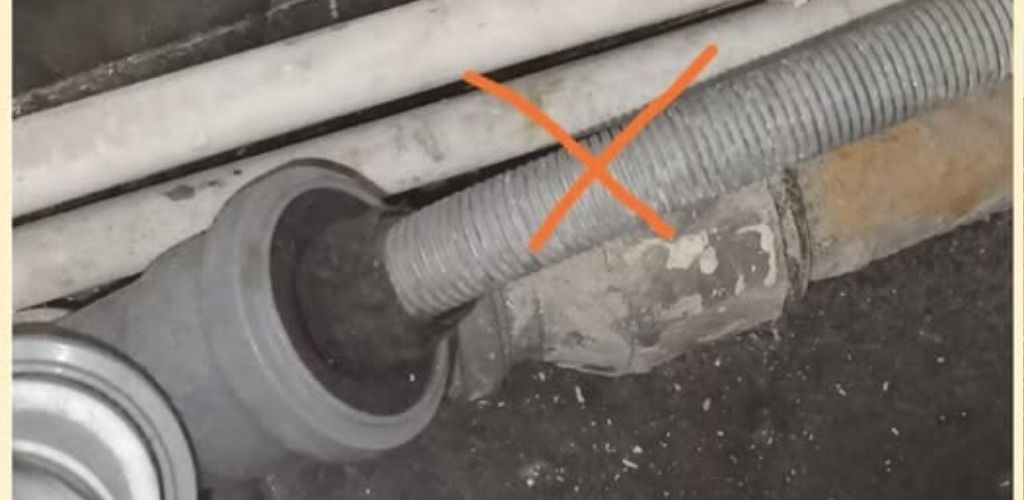
When opt-ing for a direct sewer line setup, inexperienced plumbers and DIYers frequently commit a critical installation mistake. Typically, a technician will pull the plastic construction plug out of the open sewer line, push a standard black rubber reduction sleeve (also called a sealing gasket or rubber flush cuff) into the pipe, and simply jam the ridged washing machine hose straight into the rubber opening. While this friction-fit joint seems tight initially, it represents a major plumbing failure waiting to happen. Over time, the constant exposure to hot water, harsh laundry detergents, and vibrations causes the flexible rubber to dry out, crack, and shrink.
As the rubber seal loses its structural elasticity, microscopic gaps develop, allowing foul sewer smells to slowly seep into your living space. More alarmingly, the intense hydraulic pressure generated during the appliance’s pump-out phase can easily blow the hose completely out of the dried-up sleeve. If you ever find yourself struggling to install a new, stiff rubber gasket into a cold PVC pipe during setup, a handy pro-tip is to submerge the rubber adapter in hot water for roughly 20 minutes. This softens the material, making it pliable enough to slip into the pipe smoothly before it cools and forms a tight seal. However, for a truly permanent, leak-proof connection, you should avoid relying on friction alone.
The Ultimate Leak-Proof Solution: Clamped Adapters and Anti-Siphon Valves
For a completely secure connection that will never pop loose under pressure, you should upgrade your plumbing with an external anti-siphon check valve or a specialized mechanical adapter. A solid polypropylene or chrome-plated check valve is an excellent investment, particularly if your drain pipe sits below the water level inside the drum. It blocks dirty wastewater from siphoning back into the machine and stops backup water if the main sewer line becomes clogged. Alternatively, you can create a bulletproof connection using two inexpensive parts: a rigid PVC sewer pipe reducer and a threaded straight or angled plastic hose adapter. By screwing the adapter tightly into the pipe and securing the flexible drain hose onto the plastic nozzle with a heavy-duty stainless steel worm-gear clamp, you create a mechanical lock that cannot slip, dry out, or burst apart, keeping your home completely safe from accidental floods!