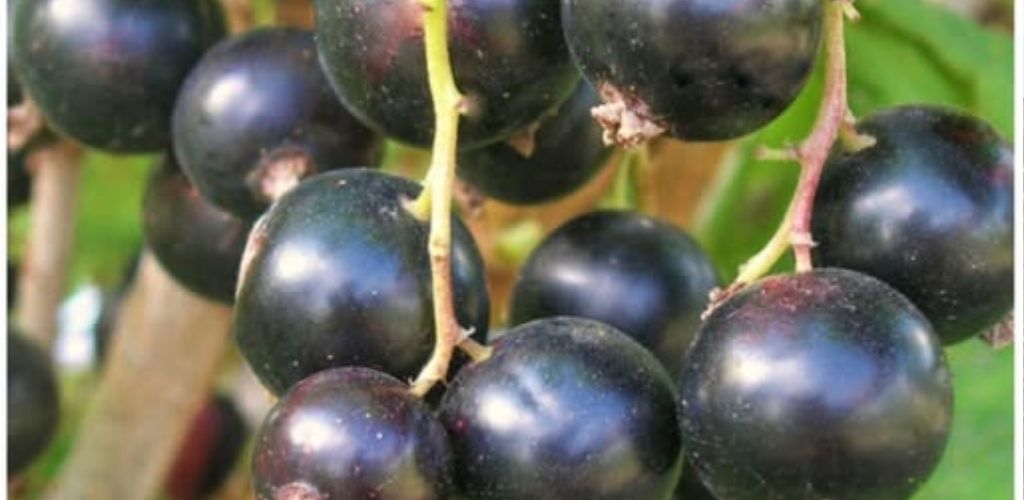
Currants… Can any self-respecting gardener imagine a plot without these bright, juicy berries? In summer, there’s nothing better than a cool currant compote, a spoonful of fragrant jam, or a fresh handful of berries picked straight from the bush.

For many, currants are a taste of childhood. You probably remember how, in the village, you’d pick bunches of currants from your grandmother’s bush and enjoy them right there on the spot.
But when you have your own plot of land, you suddenly discover that the berries are small, sour, and fall off before they can be harvested.

What is the reason?
The answer is simple: currants, while unpretentious, require a few tricks to get the most out of them. I struggled with this for a long time, but then I discovered a method that completely changed my approach to caring for this berry.
Now I don’t have to run around with a watering can, spend a ton of money on fertilizer, or worry about diseases. I water the bushes once in the spring, and by midsummer I’m harvesting such a bountiful harvest that even my neighbors are amazed.
The secret is incredibly simple, and, frankly speaking, until you try it yourself, it’s hard to believe.
Why berries can be small and sour
If your harvest is disappointing, it’s likely due to one of three factors:
- Overwatering. Many people believe that berries need a lot of water and overwater their bushes. This causes the roots in the top layer to rot, weakening the plant.
- Overfertilization. Nitrogen fertilizers, especially manure, are often used in excess. The bush begins to actively produce greenery, and the berries become watery and lose their flavor.
- Lack of mycorrhiza. Nature has created a symbiosis between fungi and plants. The mycelium helps the roots absorb nutrients. Without mycorrhiza in the soil, currants must cope on their own, which affects the yield.

You can, of course, adjust your watering and fertilizing schedule. But there’s a simpler way: a single spring watering that will save you from worrying for the entire season.
Spring watering that lasts until autumn
Like many gardeners, I spent a long time searching for the ideal watering and fertilizing ratio. But one day I came across an article about mycorrhiza and realized that all my efforts were simply subverting the natural balance. After all, in nature, plants manage on their own—with the help of fungal organisms.
Fungi living in the soil connect with the roots, creating a symbiotic system. They “hunt” for nutrients and transfer them to the bush, and in return, they receive carbohydrates produced by the currants. Consequently, the bush no longer requires fertilizer—it provides itself with everything it needs.

But for this to work, everything needs to be done correctly.
How to properly introduce mycorrhiza
Simply scattering the product under the bush is not enough. It will only be effective if the conditions are met.
When to apply. The best time is when the soil warms up to 10 degrees Celsius. This is usually late April or early May. If the soil is cold, the mushroom will not take root.
How to water. Dilute the preparation according to the instructions and water the roots on a cloudy day or early in the morning. Immediately afterward, mulch the soil to protect the mycelium from drying out.

How do you know the process has begun? You’ll see signs in just a couple of weeks: the leaves will become brighter, the shoots will be stronger and taller, and the berries will be larger. And by summer, you simply won’t believe your eyes—the berries will be large, juicy, and sweet.
What to consider
Mycorrhiza is a living organism. It can be easily destroyed if the following rules are not followed:
— Don’t dig up the soil under the bushes to avoid damaging the fungal threads. — Don’t apply chemical fertilizers, as they kill the mycorrhiza. — Add humus once a month to enhance the effect.
If everything is done correctly, your harvest will be record-breaking. For several years now, I’ve been able to forget about currant problems. I watered once in the spring, and I’ve been enjoying the results all season long.

“That can’t be!” the neighbors exclaim in surprise. “Currants don’t come like that!”
But as soon as they taste the berry, they immediately run for the mycorrhiza. You should try it too. The method is simple, and the results are stunning.
One spring watering and no worries. And in the summer, only ripe, sweet, large currants. Have you tried this method? Share it in the comments – maybe you have your own gardening secrets.