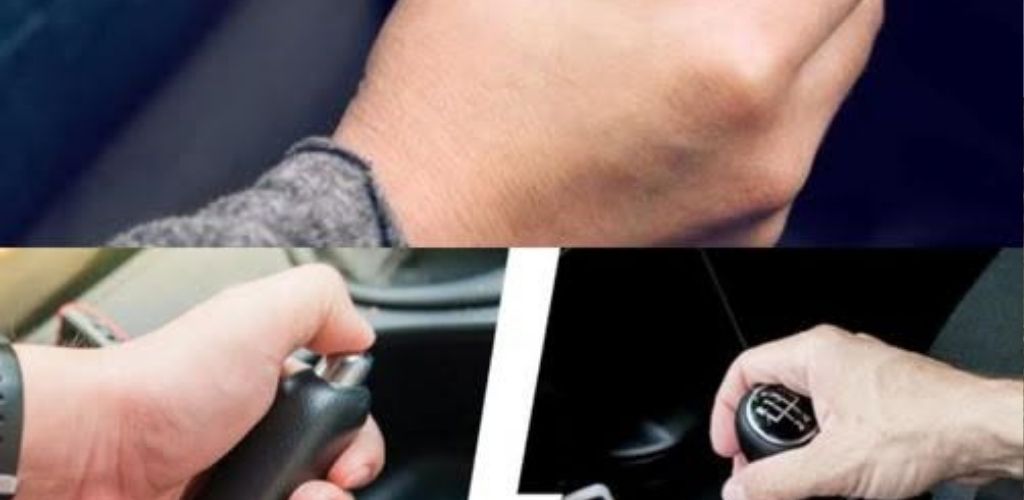
How to Park Your Car Safely: Should You Leave It in Gear to Avoid Transmission Damage?
Hi everyone! My name is Max, and as someone who has spent thousands of miles behind the wheel across all kinds of terrain, I frequently hear heated debates about the correct way to leave a vehicle parked. The question of whether you should leave your car in gear or rely solely on the parking brake—and how to do it without destroying your gearbox—is a certified classic of garage talk. Let’s clear up the confusion once and for all, because the price of a mistake here is either a staggeringly expensive transmission repair or, far worse, your vehicle rolling away uncontrolled down a steep incline. Properly securing your vehicle requires understanding the mechanics of your specific gearbox and adapting your parking habits to changing weather conditions.
Mastering the Manual Transmission: Why Leaving It in Gear is a Winter Must-Have
If your vehicle features a manual transmission, the golden rule is incredibly straightforward: leaving your car parked in gear is an absolute must-have habit, especially during freezing winter conditions. But which specific gear should you choose? Your absolute best options are either first gear or reverse. These two positions possess the highest gear ratios in the entire transmission system, which means the engine’s internal resistance makes it physically hardest for the crankshaft to turn under the dead weight of the vehicle.
Why is relying entirely on the mechanical handbrake a risky gamble? If you only use the handbrake, you risk the brake pads freezing solid to the rotors in freezing slush, or the high-tension steel cable simply stretching, fraying, and snapping over time. To avoid damaging your vehicle or causing an accident, the primary danger here is actually your own forgetfulness rather than mechanical wear. Get into the unshakable habit of fully depressing the clutch pedal before twisting the ignition key so your vehicle doesn’t accidentally lurch forward into the nearest fence or parked car.
Automatic Transmissions: The Costly Mistake Millions Make with the Park Position
With an automatic gearbox, the structural mechanics are fundamentally different because you have a dedicated “P” (Park) mode on your shifter. When you slide the selector into the Park position, a heavy-duty metal latch, mechanically known as a parking pawl, drops down to physically lock the parking gear attached to the transmission output shaft. This mechanism stops the wheels from turning, but it is not designed to bear the shifting physical load of a multi-ton vehicle on its own.
The hidden danger occurs when you halt on a steep incline and immediately throw the shifter straight into Park before letting your foot off the primary brake pedal. In this exact moment, the entire weight of the car slams directly onto that single, relatively small metal parking pawl. Later, when you return to your vehicle and try to shift from “P” to “D” (Drive), you will often hear and feel a painful, loud metallic clank. This brutal mechanical strain is incredibly harmful to the internal locking mechanisms and can lead to catastrophic component failure over time.
The Pro Driver’s Parking Sequence for Automatic Vehicles
To completely eliminate this destructive stress and ensure your automatic transmission rests completely stress-free, you must train yourself to use a specific, mindful parking sequence every single time you stop. This method ensures that the vehicle’s massive weight is safely absorbed by the heavy-duty braking system, which is explicitly designed for friction and load-bearing, rather than your delicate internal transmission gears.
Follow this simple, damage-free parking algorithm whenever you pull into a space:
- Step 1: Bring the vehicle to a complete stop and keep your right foot firmly pressing the main brake pedal.
- Step 2: Pull up or engage your handbrake (parking brake) firmly while still holding down the footbrake.
- Step 3: Gently release your foot from the main brake pedal, allowing the vehicle’s weight to shift completely onto the handbrake.
- Step 4: Only after the car has “settled” onto the parking brake should you slide the gear selector into the “P” position.
Dual-Clutch and Robotic Gearboxes: Why the Handbrake is Your Absolute Best Friend
Modern robotic transmissions, such as Volkswagen’s DSG or Ford’s Powershift, come with their own distinct set of operating nuances, but the universal advice remains the same: the handbrake is your absolute best friend. Structurally and internally, the vast majority of dual-clutch robotic gearboxes are much closer to a traditional manual transmission than a standard torque-converter automatic. Because of this mechanical architecture, leaving them parked purely in Park mode without pulling the handbrake on slopes is a direct express route to premature wear of the internal locking mechanism.
Regardless of what type of transmission is hidden under your center console, you should consistently utilize your parking brake. A common myth among drivers is that using the emergency brake too often will cause it to seize up or rust in place. In reality, the mechanical linkages and cables seize up precisely when they are left neglected and unused for months at a time. Regular activation keeps the cables moving smoothly within their protective sheaths and ensures the self-adjusting rear brake mechanisms remain perfectly calibrated.
The Ultimate Transmission Parking Comparison Guide
To help you remember how to properly secure your specific vehicle across various parking scenarios, we have organized the core mechanics into a scannable comparison matrix below:
Transmission Parking Guide & Safety Matrix
| Gearbox Architecture | Primary Parking Mechanism | Winter Parking Strategy | Critical Safety Precaution |
| • Manual Transmission | Engine Compression / Mechanical Gears | Must engage 1st or Reverse gear | Always press the clutch before starting the engine! |
| • Automatic (Torque Converter) | Internal Latching Parking Pawl | Engage handbrake before sliding into Park | Listen for metallic clanks; avoid loading the pawl on hills. |
| • Robotic / Dual-Clutch (DSG) | Mechanical Locking Pin | Always combine Park mode with full handbrake | Never rely solely on the shifter pin to hold weight on slopes. |
As a vital final tip for severe winter conditions: if you are parking a manual car in sub-zero temperatures, try to locate a perfectly flat, level parking space. This allows you to safely leave the car in first gear without pulling the handbrake up to its absolute maximum tension, drastically lowering the risk of your rear brake pads freezing to the drums or discs overnight. Take care of your transmission systems, always double-check your shifter position before turning the key in the ignition cylinder, and enjoy a safe, breakdown-free driving season!