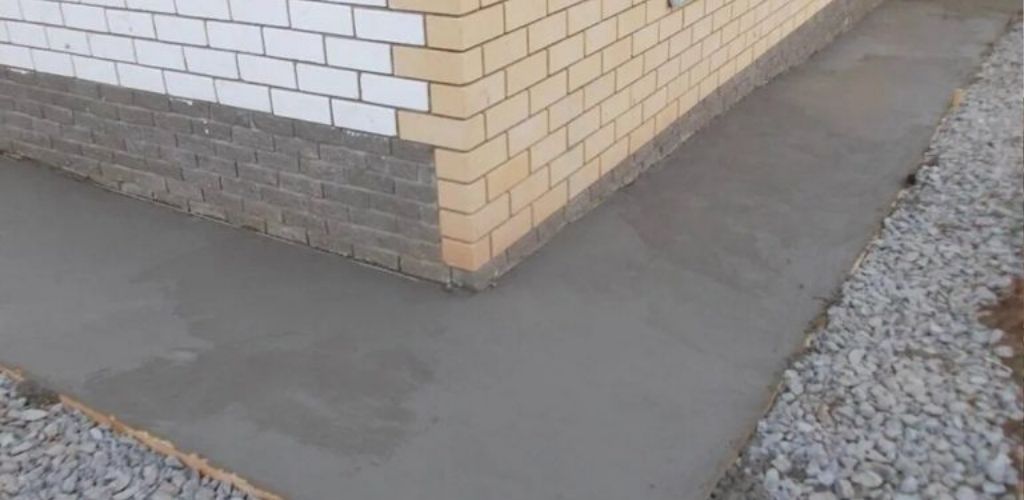
There are certain stages of construction that are often forgotten too late—once problems have already begun to manifest. We monitor the foundation, we don’t forget the roof, but the blind area is an afterthought. Even though it plays a key role in protecting the house’s foundation from moisture and ground movement, I once gave up, deciding the blind area could wait. Then I realized I was risking the entire structure. So I want to explore the most common mistakes I’ve seen with my own eyes and almost made myself.
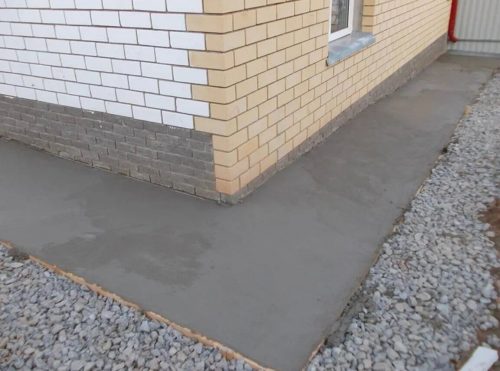
Mistake #1: “We’ll do it later—it’s not urgent.”
A very insidious trap. At first glance, the frame is ready, the windows are in place, the house is ready for habitation—everything is perfect. We’ll finish the concrete foundation later, when we have time. Then the first serious rain washes away the foundation, the water goes right under the foundation, and soon, hairy cracks appear in the walls.
Mistake #2: Not having the right slope – water stays there
The concrete pavement should drain water away from the walls, not collect it in puddles near the house. The optimal slope is 2–3 cm for every meter of its width. I once tried a “super slope”—too steep—and got the opposite effect: water rushed straight under the plinth. Remember: too much is as bad as none.
Mistake #3: Fitting close to the baseboard
It seems logical to make the joint “perfectly tight.” But in practice, after just a year, the facing finish begins to crack and peel off in places. It’s necessary to leave a gap of 1-2 cm and fill it with sealant.
Mistake #4: Skimping on width
A 50 cm wide blind area is not a protective barrier, but a decorative one. The correct width should be at least 20 cm wider than the eaves line. Only then will it truly act as a barrier against meltwater and precipitation.
Mistake #5: Eyeballing the Solution
The mixture must be made correctly: 1 part M400 cement, 2 parts sand, 3 parts crushed stone. If you add too much water, the concrete will become porous and cracked before autumn.
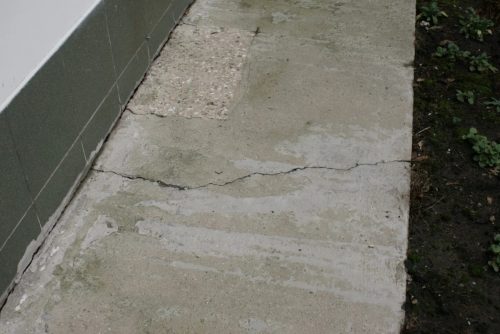
Mistake #6: Lack of reinforcement
Many people think reinforcement is unnecessary here. But this is a misconception. Without reinforcing mesh, the blind area will inevitably crack and separate along its longitudinal lines. Reinforcement and expansion joints significantly increase its durability.
Mistake #7: Uninsulated blind area on heaving soils
If you have clay soil beneath your home and experience severe frosts in winter, insulation is essential. Otherwise, the foundation will begin to rise and settle, just as the frozen ground moves.
Mistake #8: Poor waterproofing for a “soft” blind area
If you’re creating a blind area without concrete, use a profiled membrane with a wall sill. Trying to cut corners at this stage almost certainly results in water penetration under the foundation.
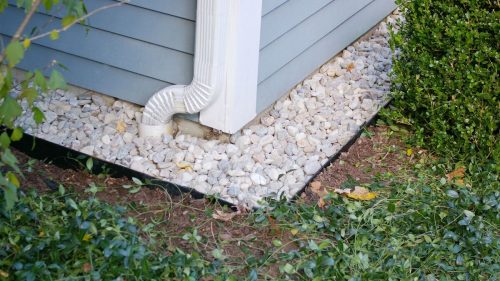
A concrete blind area isn’t a minor detail, but a key element of home protection. If it’s not done promptly and correctly, the foundation will quickly begin to deteriorate. My conclusion: it’s better to do a high-quality concrete blind area once than to spend a long time fixing warped walls, doorways, and cracks later.
Have you encountered similar mistakes or observed them in others? Tell us—I’d be interested to hear your experiences.