Have you ever thought about baking a pie or making an omelet, only to have doubts about the freshness of your eggs ruin your plans? 🤔 Breaking each one isn’t the best idea. Luckily, there are simple ways to tell if an egg is safe to eat, and you don’t even have to touch the shell. I’m sharing my tried-and-true methods ⬇️
Eggs are one of the most popular foods in the world: it’s hard to imagine baked goods, salads, appetizers, and many other dishes without them. For a long time, the yolk was blamed for increasing cholesterol, but modern research has proven otherwise. However, they do contain beneficial antioxidants, vitamins (except C and K), and important minerals—calcium, zinc, iron, phosphorus, and potassium. The key is to choose a truly fresh egg.
🥚 How to choose quality eggs at the store
To avoid overpaying for a low-quality product, it’s best to check it before purchasing. A few simple steps will help you quickly determine how fresh an egg is.
1. Check the markings
The manufacturer is required to indicate the expiration date and egg category. The markings are as follows:
- D – dietary (date should not be older than a week);
- C – table (stored for 25 days).
Table eggs can be stored without refrigeration for up to 20 days—it’s important to avoid sudden temperature changes.
Sizes are indicated by letters: СВ, С0, С1, С2, С3 . Weight varies, but quality remains the same.
👍 When buying eggs, carefully look at the date and category – this is the main indicator of freshness.
2. Light shaking
Take the egg in your hand and shake it gently.
- Fresh eggs do not make sounds or vibrate.
- If there is anything loose inside, it is better to return the packaging.
3. Inspection of the shell
The shell should be:
- clean,
- without cracks,
- free of growths and dirt,
- matte and smooth.
A damaged shell poses a risk of bacteria and product spoilage.
4. Using an ovoscope
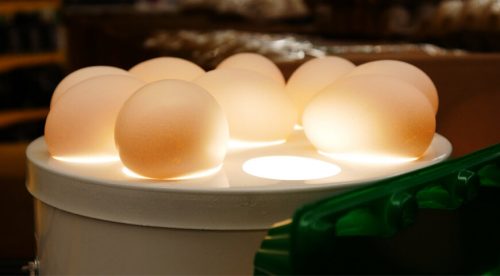
Large supermarkets often stock ovoscopes—devices that allow you to examine an egg.
If you see:
- dark spots,
- too large an air chamber,
- blood rings –
the egg is no longer fresh.
🏠 How to check the freshness of eggs at home
Even if you’re confident in your choice, it’s best to double-check that the product isn’t spoiled before cooking. Here are some foolproof methods.
1. Water test
Pour water into a glass and drop in the egg.
- Lies horizontally on the bottom for 2–3 days from the moment of demolition.
- Standing upright or slightly raised by the blunt end – the egg is older, 14–20 days; can be used.
- If it floats up , we throw it away without regret.
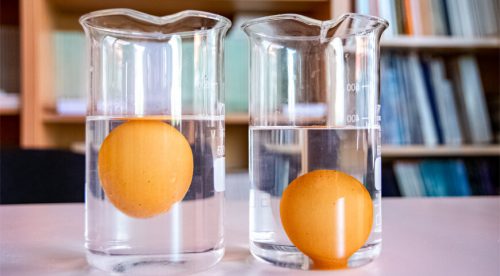
The difference in buoyancy is explained by the increase in the air chamber inside the egg.
2. Rotation method
Fresh eggs stop spinning quickly—the liquid inside is dense.
Spoiled eggs spin longer, like a top.
3. Smell check
Even through the shell, a spoiled egg has a distinctive sulfurous odor.
If you have even the slightest suspicion, don’t risk it.
4. Light from a table lamp
Hold the egg up to a lamp.
If the yolk is almost black or dark inclusions are visible, the product is spoiled.
5. Ultraviolet
Under UV illumination:
- a fresh egg will be red,
- the older, the paler the shade.
Choosing the right egg not only enhances the taste of your dish but also your safety. And these methods are quick, convenient, and effortless to use every day.