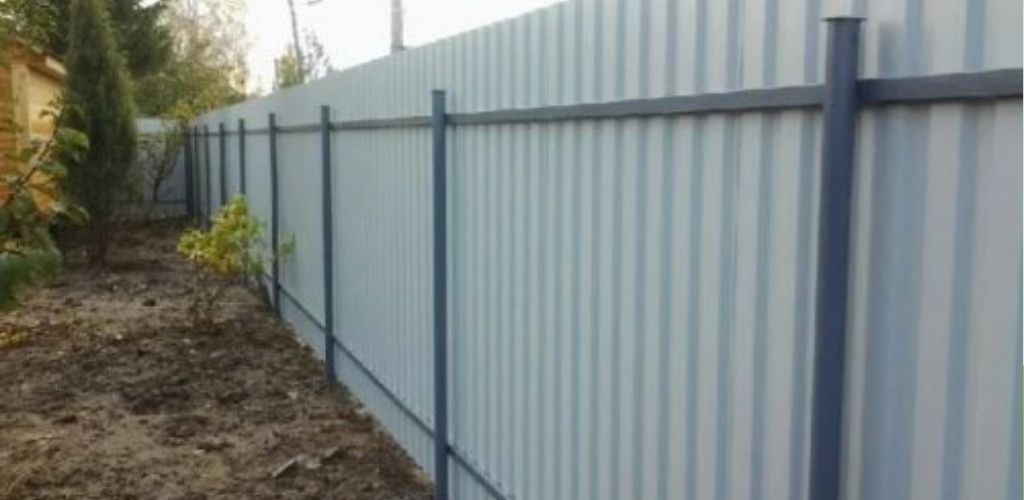
I was inspired to write this article by a situation that happened to a friend. He had problems with his neighbors over a fence he had installed between his properties.
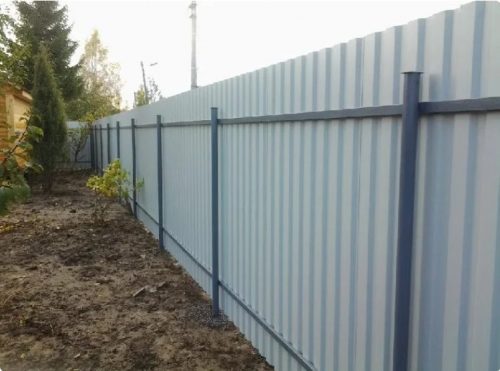
It all started with the fence becoming a nuisance, supposedly because it blocked the sun and the plants weren’t growing well, although there were no plants near the fence, only various “junk.”
The situation gradually escalated, and eventually, one day, the neighbor rolled up half the sheets and was preparing to haul them away. Luckily, a friend arrived just in time.
The neighbor argued that he was the one who put up the fence and that now he didn’t need it and it was in the way. Although the previous owner of my friend’s property claimed otherwise.
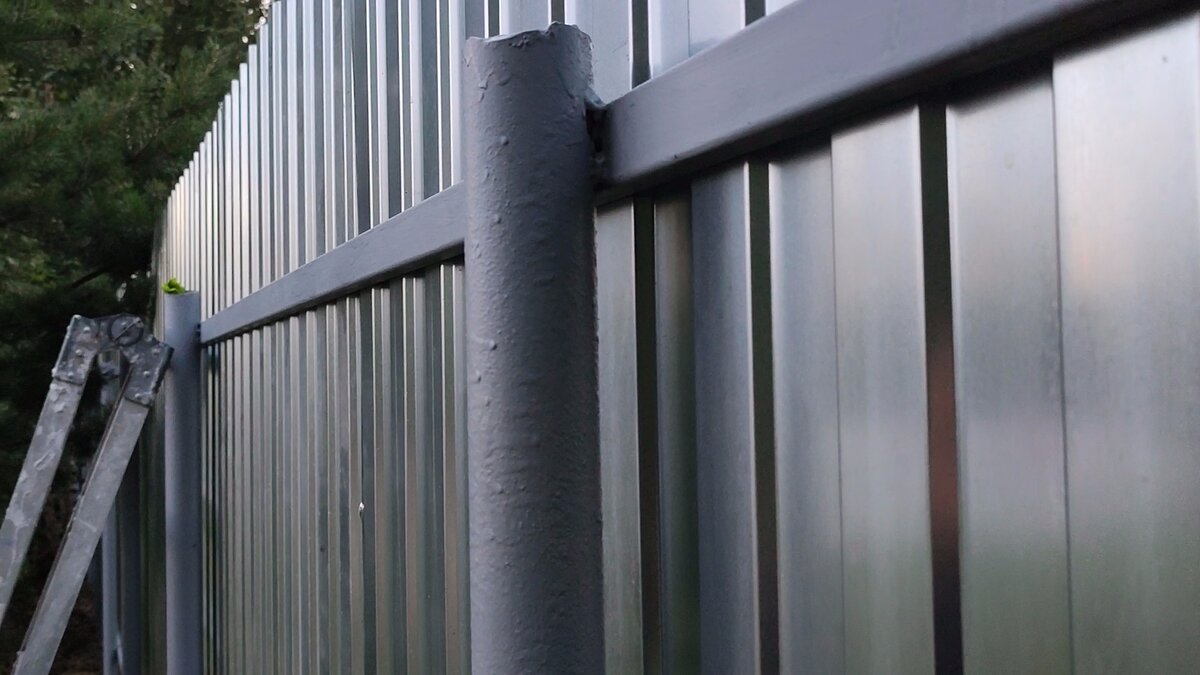
His argument was that the entire fence structure is on his side (pipes, crossbars) and, according to some building codes, the owner of the fence is the one on whose side the fence frame elements are located.
Which is logical in principle… And as it turned out during the showdown, he wanted to completely dismantle the fence, and sell the plot altogether.
The situation was resolved when the previous owner of the friend’s land was able to somehow provide documents to confirm it, and the whole situation was hushed up.
Why did this happen? Because the agreements were never recorded anywhere.
Yes, on the one hand, the law prohibits building solid fences between properties. But even here, this is possible if you come to an agreement with your neighbors.
To avoid such situations in the future, you should formalize all agreements with your neighbor in writing when installing a fence.
Include any details in the consent, for example: agreement on the fence height, the type of material, who will maintain it, whose property the fence is, the requirement that if the property owner changes, the other party must be informed to agree on the terms with the new owner, etc.
It seems absurd, but no… in our society, you have to be prepared for anything. This will help you get a court ruling in your favor if any issues arise in the future.
Here in Russia, neighborly wars are a whole topic that could be made into a movie, so tomorrow your almost-friend, your good neighbor Nikolai Ivanovich, might suddenly get angry about something and write a complaint.
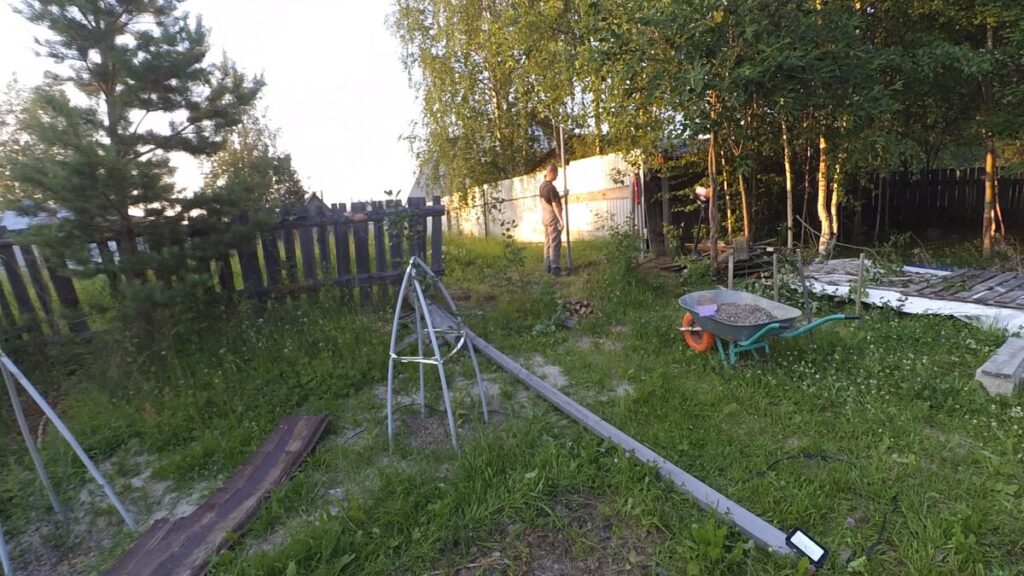
If you have agreed and received consent only for the fence to be solid and the neighbor does not object to this, then the fence should be positioned so that the posts and joists (crossbars) face your property, and the sheet should be covered from the neighbor’s side.
This will be an additional advantage for you if your neighbor wants to take the fence with him when selling the property.
After all, by default it is generally accepted that the owner of the fence is the one who has an engineering structure on the site.
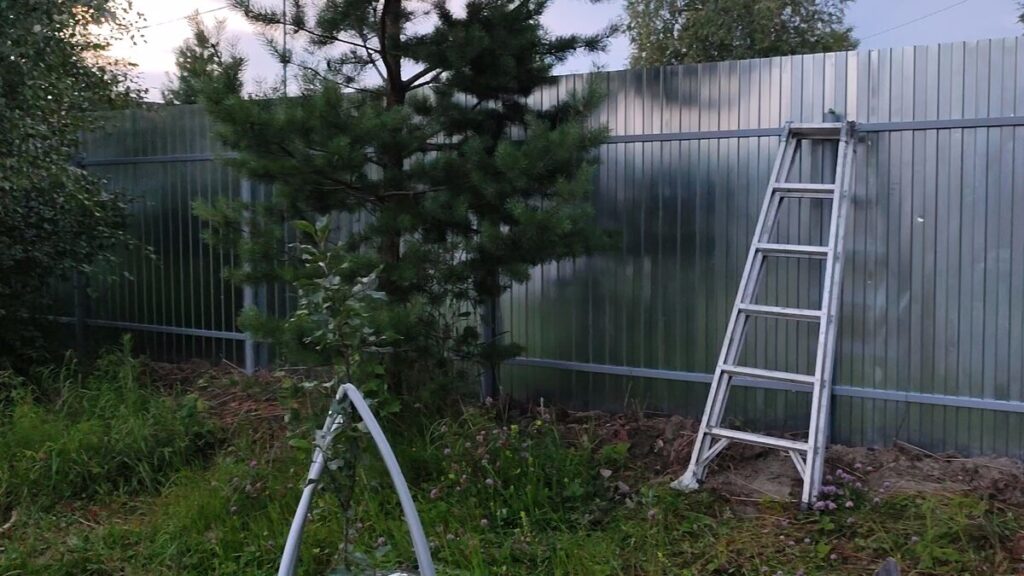
Another point: if you build a fence with the posts facing out, it will be very easy for someone to climb onto your property using the joists, like a ladder. Which isn’t very safe.
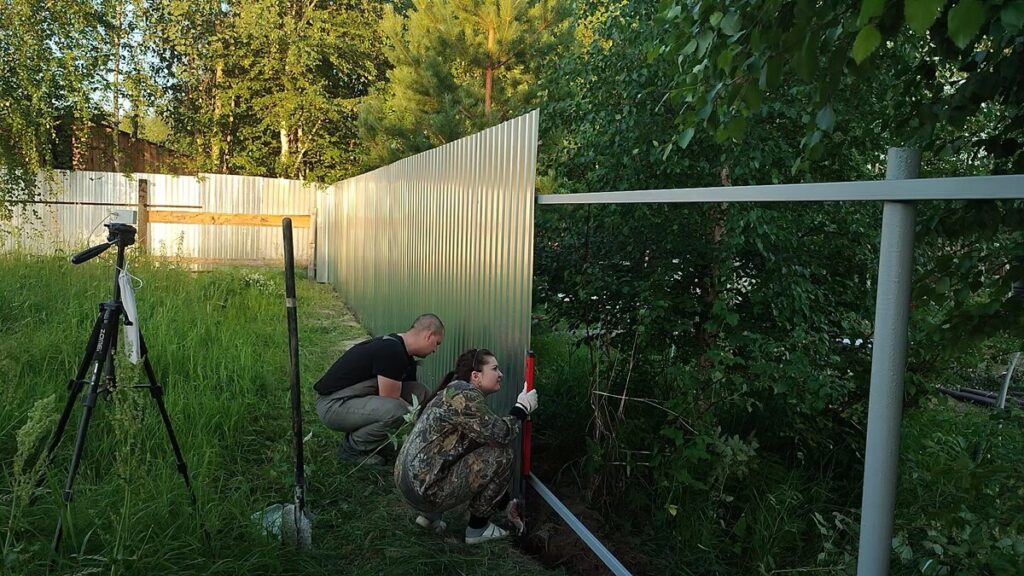
In addition, the location of the engineering structures of the fence on your site is a convenient place for attaching something.
For example, a floodlight, a hedge, hanging something to dry, straightening a fence if it suddenly leans, etc.
Another tip: take photos of receipts and fence construction contracts and save them in the cloud, in case they come in handy someday.
This year we also installed a solid fence and did exactly as described in this article.