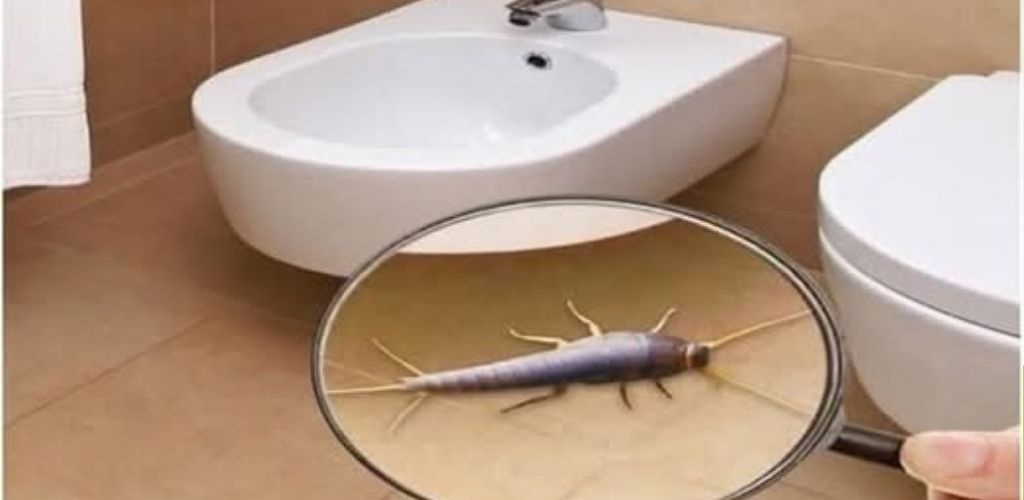
One day, common silverfish took up residence in our apartment. At the time, I’d already been studying biology for six months, so my knowledge was sufficient to realize they weren’t flytraps or mutant cockroaches.

I even identified the species! But I had no idea I was sharing a bathroom with legendary creatures.
You might read online that silverfish are ancient insects that appeared long before the dinosaurs. But that’s not true.
The silverfish family appeared relatively recently – 100-110 million years ago, at the same time as ants and much later than mammals.
The funny thing about silverfish is that they are very primitive, but at the same time surprisingly effective.

Our little ones are primarily wingless insects. Their ancestors never knew how to fly.
Most similar insects are highly specialized survivalists, living in very specific conditions and within a small range. Silverfish, however, can be found anywhere humans live!
All silverfish need is high humidity (75-97%) and room temperature. They’ll find food on their own without any problem.
Silverfish are capable of digesting cellulose and chitin, and they particularly enjoy starch. Therefore, they feed on everything from glue to books.
As if that weren’t enough, silverfish are also surprisingly resilient. Their tiny bodies, no more than 2 centimeters long, are covered in silvery scales that easily break off upon contact. This allows silverfish to slip out of the webs and mandibles of indoor predators.
The most interesting thing is that scales regenerate over time. And not only that. Silverfish regrow lost legs, antennae, and tail bristles in just 3-4 weeks.
Since insect development is based on molting, growth and regeneration are a sore subject for most of them.
Adult insects, as a rule, do not molt, so if they lose a limb, they are forced to live out their lives as best they can.
Silverfish, on the other hand, molt up to 30 times a year, even when they reach maturity. And they live a whopping three years! Unprecedented longevity for insects!
Everything written above creates the image of them as extremely tough and tenacious creatures that can easily survive in almost any conditions.
But that’s not entirely true. These animals do have a couple of drawbacks. First, they’re almost defenseless.
Silverfish have weak jaws, run relatively slowly, and their scaly protection takes a very long time to recover.
The second problem is their low fertility. A female will lay less than 100 eggs in her lifetime.
They are significantly less fertile than cockroaches and other household pests, so they are often displaced by them. This is what happened in my house.
It’s a shame. Unlike cockroaches, these arthropods emerge only at night, avoid human food, and do not carry parasites or diseases dangerous to humans.
Perhaps their waste products can cause an allergy, but even that is rare.