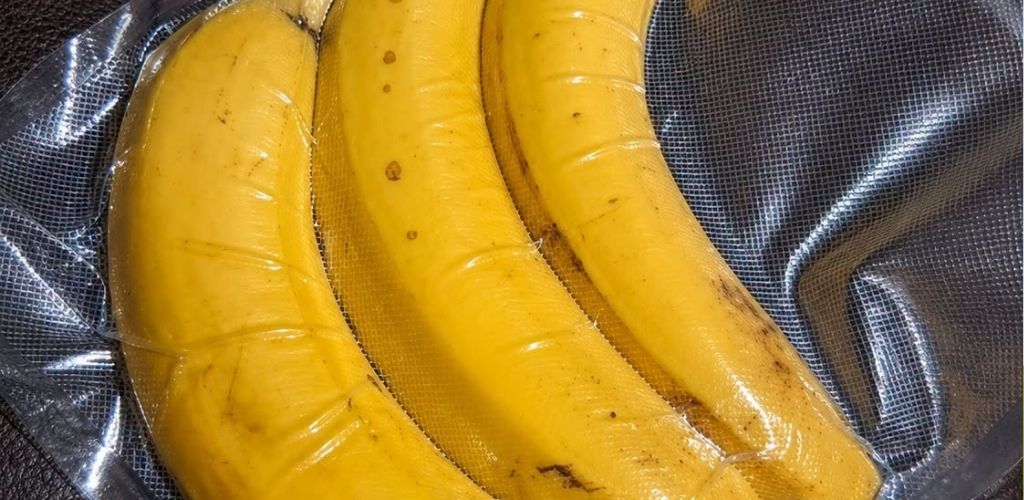
We’ve all done something unusual in the kitchen out of pure curiosity. And one of those experiments that has gone viral involves something as simple as taking three good bananas and vacuum-sealing them, without any clear culinary purpose. The result? A little science lesson worth knowing before trying it at home.
Cutting those bananas a few days later reveals surprising changes in color, texture, and even aroma. Here’s what’s really happening inside the bag, why it happens, and whether it’s worth trying this technique with the fruit.
The science behind vacuum packaging
Vacuum sealing works by removing air (especially oxygen) from an airtight bag. This, in theory, helps to:
- To stop oxidation , which is the reaction that darkens fruits.
- Reduce microbial growth , since many fungi and bacteria need oxygen.
- Preserve the moisture of the food.
This technique works very well with meats, cheeses, and firm vegetables. But with bananas, the behavior is completely different due to their composition and natural ripening process.
What happens when you open vacuum-packed bananas?
Depending on the initial degree of ripeness and the time spent sealed, these are the most common changes observed when cutting the fruit:
1. Darker, shinier, and almost translucent pulp
Without oxygen, the pulp doesn’t turn brown as it usually does outdoors, but instead takes on a deep yellow, amber, or even translucent color. The texture may feel firmer or slightly slippery due to the trapped moisture. It’s not mold; it’s simply the result of enzymatic activity combined with the enclosed moisture.
2. Slower ripening at the beginning
Ethylene, the hormone responsible for ripening, needs oxygen to work effectively. That’s why, inside the bag, the banana stays firm longer than usual. However, once you open the package, the process accelerates considerably and the fruit ripens very quickly.
3. Condensation inside the bag
Since the moisture released by the fruit has nowhere to escape, it accumulates on the walls of the container. This appears as small droplets or a “sweating” effect. This is normal, although prolonged storage can encourage mold growth. A good trick is to pat the fruit dry with a paper towel before sealing it.
4. Slightly fermented smell
After a few days, when you open the bag, you might notice a sweet and sour or slightly alcoholic aroma. This is because the natural sugars begin to break down in a low-oxygen environment. It’s not dangerous, but it indicates that the fruit has passed its peak.
5. Black peel in a short time
One of the most striking results is that the peel darkens very quickly. This happens because the peel contains polyphenol oxidase, an enzyme that reacts when tissue is damaged. The pressure of vacuum packaging bruises the peel, activating these enzymes. Interestingly, although the banana may appear completely black on the outside, the inside is usually perfectly edible.
Are these bananas edible?
The short answer is yes, provided they pass a simple inspection:
- Suitable for consumption: firm pulp, neutral or sweet smell, without mold spots or viscous texture.
- They must be discarded if: they have a sour or fermented smell, a sticky or slimy texture, or any trace of mold, however small.
Is it advisable to vacuum-pack bananas?
Usefulness depends on the objective:
- For smoothies and frozen desserts: yes, it’s very useful. Sealing peeled slices and freezing them preserves the flavor and prevents freezer burn.
- It’s also ideal for baking . You can store ripe, peeled bananas ready to use in banana bread or muffins.
- To extend the shelf life of fresh whole bananas: it is not recommended. Trapped moisture accelerates spoilage and the peel is easily damaged.
How to do it correctly
If you want to take full advantage of vacuum sealing bananas, follow these steps:
- Peel and slice the bananas. Optionally, briefly soak them in lemon juice to prevent browning.
- Arrange them on a tray without them touching and freeze them first, to prevent them from sticking together.
- Vacuum seal them in portions according to your usual use.
- Label them with the date and store them in the freezer. They can last up to a year in good condition.
Final reflection
What began as a pointless experiment ended up being a valuable lesson in food chemistry. Vacuum-sealed bananas don’t keep any better at room temperature, but the process reveals how oxygen, enzymes, and moisture interact to transform an ordinary fruit into something visually stunning.
The conclusion is clear: vacuum sealing is a powerful tool, but not a universal one. For bananas, its true potential emerges when combined with freezing. And, as this case demonstrates, sometimes curiosity in the kitchen can teach us more than any recipe.