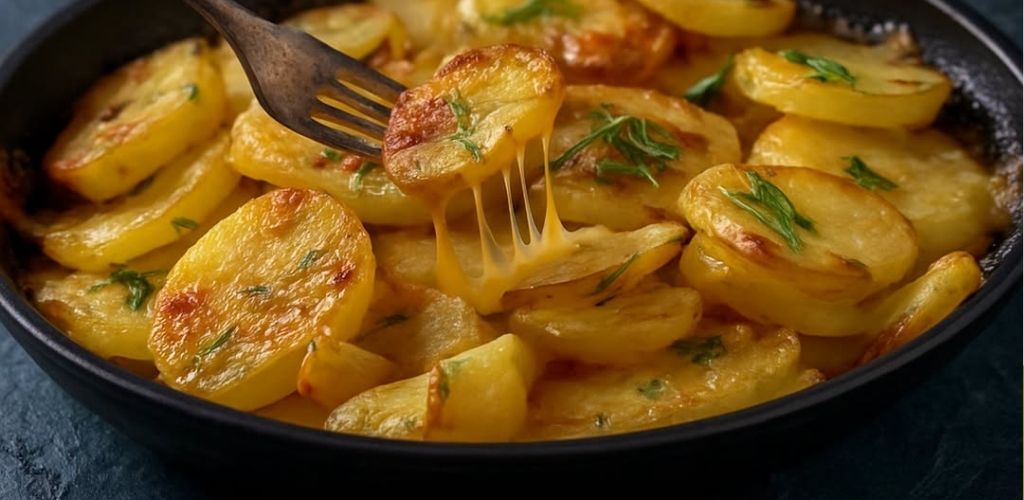
Northern Italian cuisine is characterized by its simplicity and absolute respect for quality ingredients. One of the most representative dishes of this philosophy is sautéed potatoes, known there as patate in padella . This dish, served both as a side for meat and fish and as the star of a light dinner, demonstrates that extraordinary results can be achieved with just a few ingredients.
In this recipe, you’ll discover how to transform ordinary potatoes into a golden side dish, fragrant with Mediterranean herbs and with the perfect balance between crispy exterior and creamy interior. It’s a versatile, economical, and quick dish, ideal for any day of the week.
Why do Italian potatoes have such a distinctive flavor?
The success of this recipe doesn’t depend on exotic ingredients, but rather on a series of small details that make all the difference. In northern Italy, especially in regions like Lombardy, Veneto, and Trentino-Alto Adige, potatoes are cooked using a method that combines pre-cooking, slow browning, and flavoring at the end of the process.
The three pillars of this technique are:
- Choosing the potato : firm-fleshed varieties that do not fall apart when cooked are used.
- The right fat : good quality extra virgin olive oil, sometimes combined with a little butter to give it a more spreadable touch.
- Aromatic herbs : fresh rosemary, sage and, in some cases, garlic, which perfume the potatoes without overpowering their natural flavor.
Ingredients needed
To prepare this recipe for four people you will need very accessible ingredients:
- 1 kilogram of medium-sized potatoes, preferably firm flesh
- 4 to 5 tablespoons of extra virgin olive oil
- 2 whole garlic cloves, slightly crushed
- 2 sprigs of fresh rosemary
- A few fresh sage leaves (optional)
- Coarse salt to taste
- Freshly ground black pepper
- A knob of butter (optional, for the end of cooking)
Step-by-step preparation
1. Prepare the potatoes
Wash the potatoes well and peel them. Cut them into even cubes of approximately two to three centimeters. Ensuring all the pieces are a similar size is essential for them to cook evenly.
2. Optional pre-cooking
This is one of the secrets of the northern version: briefly boiling the potatoes before sautéing them. Place the cubes in a pot with cold, salted water, bring to a boil, and cook for five to seven minutes, until they are just tender on the outside but still firm on the inside. Drain them well and let them rest for a few minutes to dry completely. This step guarantees a creamy interior and an extra crispy exterior.
3. Sauté in a pan
Heat the olive oil in a large frying pan, preferably cast iron or with a thick bottom. Add the crushed garlic cloves and a sprig of rosemary to infuse the oil with its flavor. When the garlic is golden brown, remove it to prevent bitterness.
Arrange the potatoes in a single layer, without piling them up. Cook over medium-high heat without moving them for several minutes, until a golden crust forms on the bottom. Only then should you turn them over. Repeat the process until all sides are crispy and a deep golden brown.
4. Flavor and serve
When the potatoes are almost cooked, add the remaining rosemary, the sage leaves, and, if you like, a knob of butter for shine and a more rounded flavor. Season generously with salt and pepper and mix gently so as not to break the pieces.
Serve immediately, while they are nice and hot and crispy.
Tips for a perfect result
- Do not cover the pan during cooking: the steam softens the potatoes and ruins the crispiness.
- Use a sufficiently large pan : if the potatoes are piled up, they will steam instead of browning.
- Add salt at the end : adding salt too early causes the potatoes to release water and lose texture.
- The fire must be constant : not so high that it burns the outside leaving the inside raw, nor so low that it does not generate the golden crust.
Variations and pairings
These potatoes pair perfectly with grilled meats, roast chicken, baked fish, or simply topped with a fried egg for a complete meal. In some regions, diced bacon is added at the start of cooking, which adds an extra layer of flavor.
You can also pair them with a fresh green salad and a glass of dry white wine from northern Italy, such as a Soave or a Pinot Grigio, for an authentically Mediterranean experience at your own table.