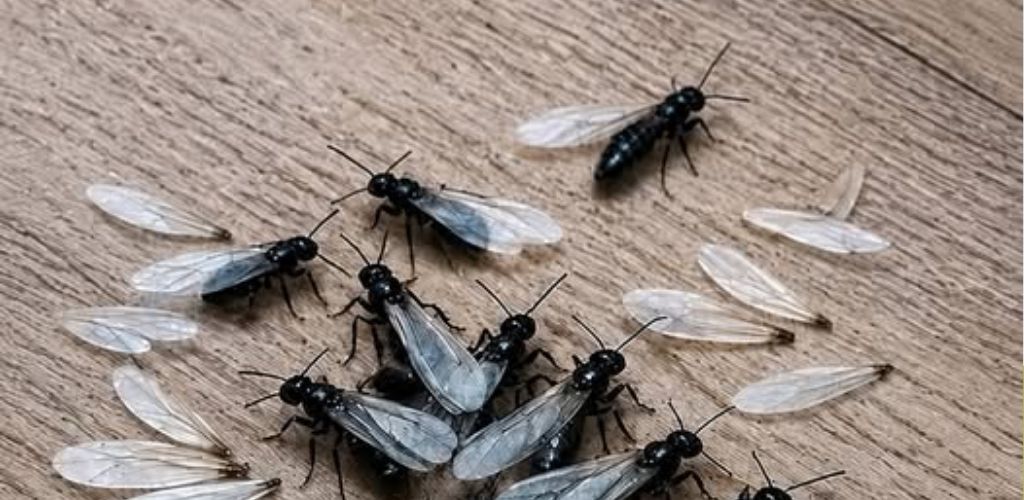
Discovering a swarm of winged or detached insects near the main entrance of a home often causes immediate concern. Although they may be mistaken for flying ants at first glance, they could be reproductive termites, also known as winged termites or swarmers . These are responsible for leaving the original colony to establish new ones, and their appearance is usually the first visible sign of termite activity nearby.
How can you tell the difference between a winged termite and a flying ant?
Although they may look similar at first glance, there are clear differences between these two insects. Paying attention to physical details can help you identify the type of pest you’re dealing with and act accordingly.
- Antennae: Termites have straight antennae, while flying ants have bent or curved antennae.
- Waist: The termite’s body is uniform and thick-looking, without a marked separation. In contrast, the ant has a narrow and well-defined waist.
- Wings: Termites have two pairs of wings of the same size, while flying ants have larger front wings than rear wings.
Another useful fact is that winged termites often shed their wings shortly after swarming. That’s why it’s common to find small piles of wings near doors, windows, or light sources inside or outside the house.
When do winged termites appear?
Swarms of termites typically occur during periods of warm or humid weather, especially after rain. Seeing flying termites doesn’t necessarily mean the house has serious damage, but it is a clear indication that there may be an established colony nearby, or even inside the home.
Other warning signs you shouldn’t ignore
In addition to the presence of winged termites, there are other signs that can confirm an active infestation. Regularly inspecting your home helps detect the problem in its early stages.
- Mud tubes: thin paths of earth that termites build along walls, foundations, or vertical surfaces.
- Hollow wood when tapped: if a hollow sound is heard when tapping a wooden beam or frame, it may be rotten inside.
- Soft or damaged wood areas: surfaces that give way easily when pressed.
- Termite droppings: small mounds of particles similar to sawdust or fine dust.
Home inspection and prevention
As part of a basic inspection, it’s advisable to check around doors, windows, and foundations for cracks, dampness, or rotten wood . Sealing openings and reducing humidity around the house are effective ways to decrease the risk of future swarms.
Some practical recommendations include:
- Repair water leaks and leaking pipes.
- Ventilate basements, attics, and enclosed spaces where moisture accumulates.
- Keep wood, firewood and pruning debris away from the foundations.
- Seal cracks in exterior walls and window frames.
- Carry out regular inspections, especially after heavy rains.
What to do if you suspect an infestation?
If you notice signs that suggest the presence of termites, it’s best to contact a pest control professional . Early intervention can prevent costly structural damage in the long run, as termites work silently and gradually.
The most common treatments vary depending on the level of infestation and the characteristics of the dwelling. Among the most frequently used options are:
- Bait systems: stations placed around the perimeter that attract termites and eliminate the colony.
- Liquid barriers: products applied to the soil or foundations that prevent termites from entering.
- Direct treatment of wood: application of specific chemicals to the affected or exposed areas.
Conclusion: Prevention is the best defense
Finding winged or loose-winged termites in your home doesn’t always mean serious damage, but it’s a warning that shouldn’t be ignored. The key to long-term home protection lies in early detection, prevention, and consistent maintenance . Conducting regular inspections, repairing leaks, keeping wood away from the foundation, and acting at the first signs are the most effective steps to avoid major damage. With a timely response and professional help when needed, it’s possible to keep your home termite-free and preserve its structural integrity for many years.