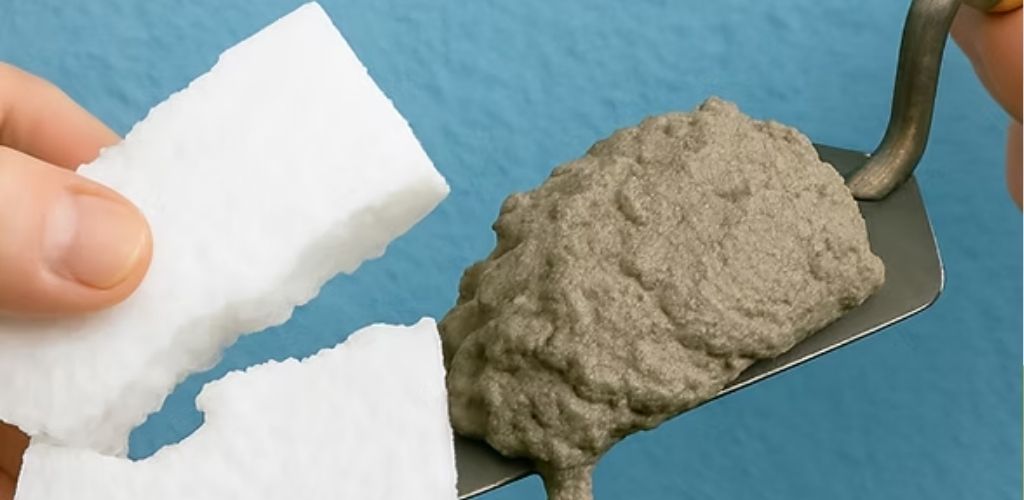
🧪 What happens when you mix cement with polystyrene?
When crushed polystyrene is incorporated into cement, a surprisingly lightweight mixture is obtained, with superior thermal and acoustic properties. This type of modified concrete is known as “lightweight concrete” and has applications in:
- Thermal insulation of roofs and walls
- Weight reduction in tall structures
- Construction of prefabricated panels
- Interior wall coverings with low structural impact
Furthermore, EPS acts as an excellent insulator, allowing for energy savings in air conditioning, something especially valuable in areas with extreme temperatures.
💡 Advantages they didn’t tell you about
- Lower structural weight: Ideal for renovations in old houses or roofs without reinforcement.
- Energy saving: Reduces the use of air conditioning and heating.
- Fire resistance: Because it is a mixture with cement, the EPS is encapsulated and does not burn easily.
- Cost reduction: Less material, less transport, less effort.
🛠️ How is it prepared?
The basic recipe includes:
- Portland Cement
- Fine sand
- Water
- Crushed expanded polystyrene (may come from recycled packaging)
The ratio varies depending on the use, but a common mix is 1 part cement, 2 parts sand, and up to 3 parts EPS. The use of plasticizing additives is recommended to improve workability.
⚠️ Precautions and practical advice
- Do not use on load-bearing structures without technical advice.
- Avoid using EPS in parts exposed to constant moisture.
- Always perform resistance tests before applying to large projects.
🌍 Why is this technique gaining ground?
In a world where energy efficiency, sustainability, and cost reduction are priorities, this mixture offers an accessible, eco-friendly, and functional solution. Major construction companies are already adopting variations of this method for residential and commercial projects.