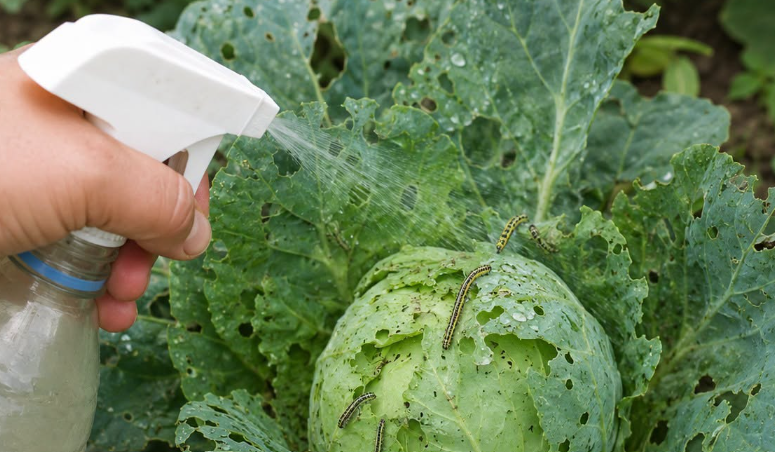
As soon as the heads start gaining weight, unwanted “guests” immediately appear on them. Caterpillars, flea beetles, slugs and aphids can in a few days turn healthy leaves into a sieve. If you do not intervene in time, in autumn there will be almost nothing to harvest.
Start with regular inspection
Do not wait until the problem becomes noticeable from a distance. Once every few days carefully examine the underside of the leaves. Exactly there pests most often lay eggs. If you remove them immediately, you can avoid a mass invasion.
Repel butterflies in a natural way
Near the cabbage beds it is useful to plant marigolds, dill, calendula or mint. Their smell confuses the insects, and they lay eggs on the leaves significantly less often.
Homemade infusion for treatment
If you have already noticed the first pests, prepare a simple remedy:
- 200 g of wood ash;
- 40 g of laundry soap;
- 10 liters of warm water.
Pour water over the ash, add the grated soap, mix well and leave for approximately one hour. After that spray the cabbage in the evening, especially carefully treating the underside of the leaves. If necessary, repeat the procedure after 5–7 days.
Do not leave chances for slugs
After rain or abundant watering scatter a thin layer of dry ash or crushed eggshell around the plants. Such a surface is unpleasant for slugs, and they will avoid the beds.
Do not forget about watering
Cabbage weakened by heat becomes easy prey for pests faster. Water it regularly, especially during periods of prolonged drought, so that the plants remain strong and restore damaged leaves more quickly.
The main rule
Do not put off the fight “until tomorrow”. When there are still few pests, simple and safe methods are enough. But neglected beds often have to be saved much more difficultly.
Take care of your cabbage already today — and in autumn it will reward you with dense, large heads that will not be a shame to put either in borscht or for winter sauerkraut.