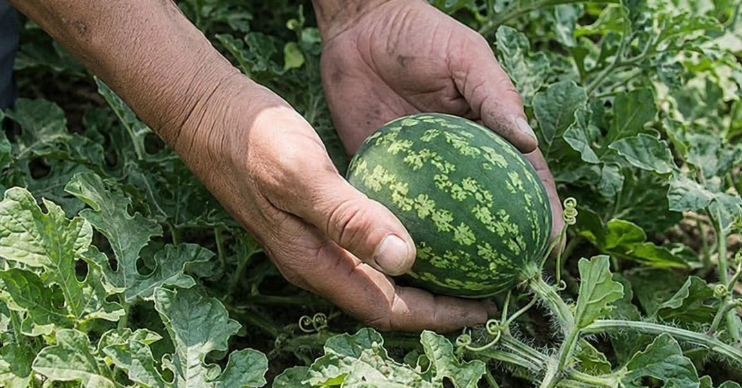
It happens like this: the vines are green, the leaves are lush, but the fruits remain small or completely stop gaining weight. In most cases the problem can still be fixed if you find its cause in time.
Why do watermelons grow slowly?
- Too little sun. Watermelon loves an open place. If it is shaded by trees, a fence or tall crops, the plant spends strength on leaves, and not on fruits.
- Lack of moisture. Watering is especially important during the period when watermelons are actively filling. The soil should be moderately moist, but without stagnation of water.
- Excess nitrogen. If you frequently feed with nitrogen fertilizers, the vines will grow quickly, and the fruits will remain small. In the second half of summer the plant needs significantly more potassium and phosphorus.
- Too many ovaries. One bush is not capable of growing a dozen large watermelons. Leave 2–4 of the strongest fruits, and remove the excess ovaries. Then the plant will direct all nutrients exactly to them.
- Cold nights. If the temperature stays below +15 °C for a long time, growth almost stops. If possible, young plants should be covered.
What will help grow large and sweet watermelons?
- Water less often, but abundantly, so that the water penetrates deeply to the roots.
- Once every 10–14 days feed with a fertilizer with increased potassium content.
- Regularly loosen the soil after watering so that the roots get more oxygen.
- Put a board, a piece of foam or straw under the fruits — this will protect them from moisture and rotting.
- Pinch the tips of the vines after the required number of fruits has formed. This way the plant will stop spending strength on excess growth.
Simple care during this period often decides everything. If you help the watermelons now, they will still manage to fill well, gain weight and delight with a sweet taste by harvest time.