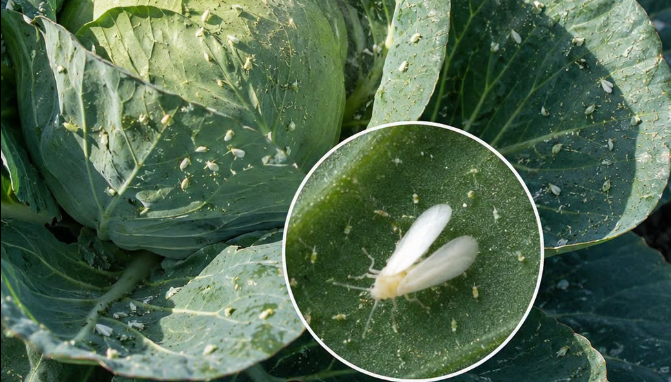
Whitefly only seems harmless. If you touch a leaf, a cloud of tiny white insects rises into the air. They suck the juice from the plants, because of which the leaves weaken, turn yellow, and the heads grow more slowly. In addition, the sticky secretions of the pest become a good environment for the development of fungal diseases.
The first method — soap solution.
Grate 50–70 g of laundry soap and dissolve in 10 liters of warm water. Spray the cabbage so that the solution gets not only on top, but also on the underside of the leaves, where the whitefly lays eggs. After 4–5 days the treatment should be repeated.
The second method — garlic infusion.
Chop approximately 200 g of garlic cloves, pour 1 liter of water and leave to infuse for a day. Then strain and dilute 50 ml of the infusion in 10 liters of water. Such a remedy has a sharp smell that well repels adult insects.
The third method — tobacco infusion.
Pour 200 g of dry tobacco or tobacco dust with 5 liters of hot water and infuse for two days. After straining add another 5 liters of water and a little liquid soap so that the solution sticks better to the leaves.
If there are already very many pests, folk remedies may not be enough. In such a case it is worth using an insecticide permitted for vegetable crops, strictly following the manufacturer’s instructions and the waiting periods before harvest.
To prevent the whitefly from returning:
• regularly remove weeds around the beds; • do not allow strong thickening of the plantings; • periodically examine the underside of the leaves; • destroy strongly affected leaves.
It is significantly easier to fight whitefly at the very beginning. If you act in time and repeat the treatments, the cabbage will quickly recover and continue to form strong, healthy heads.