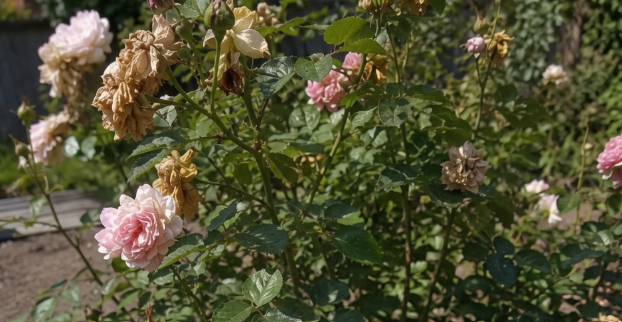
A rose can look healthy: the leaves are green, the bush actively grows, many buds appear. But instead of lush flowering they suddenly stop developing, brown at the edges and simply dry up. Such a problem occurs significantly more often than it seems, but in most cases it can be fixed.
What most often prevents the buds from opening?
Heat and lack of moisture
When the soil dries out, the plant starts saving strength. First of all it “refuses” the flowers. Water the roses abundantly at the root early in the morning or in the evening so that the water penetrates deeply to the roots.
Thrips and other small pests
If the bud is tightly closed, and inside the petals have brown stripes or seem stuck together, it is worth carefully examining the plant. Very often the culprits are thrips that damage the still unopened flowers. In such a case timely treatment with an appropriate insecticide will help.
Lack of potassium
Potassium is responsible for the formation of strong buds and prolonged flowering. If it is lacking, the flowers may not open. For feeding potassium sulfate or monopotassium phosphate according to the instructions will suit well.
Excess nitrogen
If you frequently feed the roses with nitrogen fertilizers, the bush starts actively growing leaves and shoots, and the buds weaken. In the second half of summer nitrogen is better to limit, giving preference to potassium-phosphorus fertilizers.
Thickened bush
When almost no sun and air get inside the crown, favourable conditions for the development of fungal diseases are created. Remove weak, dry and thickening shoots so that the rose ventilates well.
How to help the roses bloom abundantly again
- Water regularly, not allowing complete drying of the soil.
- Remove all dried buds — they only take strength from the plant.
- Once every 10–14 days feed with potassium-phosphorus fertilizers.
- Regularly examine the buds for the presence of thrips and other pests.
- After heavy rains or heat support the bush with foliar spraying with a complex fertilizer with microelements.
If you find the cause in time, the roses will quickly recover and already soon will delight with new large, bright flowers. The main thing is not to wait until the problem passes by itself, because exactly now the next wave of flowering is being formed.